


9 Different Types of Roofing Materials for Your Home
Not long ago, asphalt shingles, slate, or concrete tiles were the only options. Today, advanced types of roofing materials provide an unprecedented range of alternatives.
Here is a list of 9 different roofing options to consider for your next project:
1. Solar Tiles
Advanced solar collectors integrate seamlessly into existing shingles. They generate up to 1 kilowatt of energy per 100 square feet. While they help offset energy costs, they also cost more than traditional solar panels.
2. Asphalt Shingles: Common Types of Roofing Materials
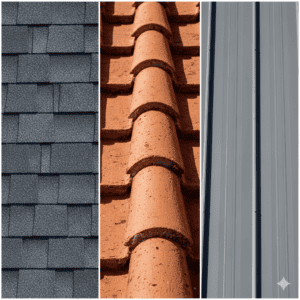
Asphalt shingles are the most common types of roofing materials in America because they are effective in all environmental conditions. When choosing them, ensure they pass the ASTM D3161 wind tests for durability. Specifically, if you live in a hail-prone area, consider impact-resistant shingles. These high-quality options may even qualify you for a discount on your homeowner’s premium.
3. Durable Metal Roofing Materials
Metal roofing comes in vertical panels or shingles. Furthermore, metal excels at sloughing off heavy snow and rain. It is lightweight and lasts about 60 years. However, it can be noisy during rainstorms.
4. Stone-Coated Steel
These interlocking panels mimic slate or clay. They resist damage from heavy rains and high winds. Consequently, they are an effective choice for wet regions or areas prone to wildfires.
5. Slate
Slate roofing lasts more than 100 years. It won’t burn, is waterproof, and resists mold. In fact, it is very effective in wet climates, though it is expensive and heavy.
6. Rubber Slate
Rubber slate looks natural and fits intricate roofs. These roofs can last 100 years but may be susceptible to hail damage. Additionally, finding trained professionals to install rubber slate can be difficult.
7. Traditional Clay and Concrete Roofing Materials
These tiles can withstand winds up to 125 mph and even earthquakes. They are excellent for warm, dry climates. However, they may require extra structural support to bear their weight.
8. Green Roofs
Green roofs are covered with plants and improve air quality. Specifically, they help reduce urban heat islands. They require a vapor barrier and professional drainage systems.
9. Built-up Roofing
This heavy roofing consists of layers of asphalt and tar. It is designed only for flat roofs. These roofs are best for roof-top decks with heavy foot traffic and can last up to 25 years.
Conclusion
The best roof for you depends on your climate and budget. Therefore, we suggest talking with licensed contractors to see what works best in your area.
Contact West Quality Roofing and Exteriors today to find out how we can help protect your home!